
 EN
EN ES
ES PT
PT TH
TH VN
VN JP
JPTrailer theft is one of the most frustrating problems in logistics.
A trailer may be parked at a yard, dropped at a customer site, waiting at a warehouse, or moving between carriers. It may sit for hours or days without a driver nearby. In many cases, the trailer carries cargo that is worth far more than the trailer itself.
That creates a simple problem for fleet operators:
If the trailer moves at the wrong time, who knows first?
Recent cargo theft data shows why this question matters. CargoNet recorded 767 supply chain crime events across the United States and Canada in Q1 2026, with estimated losses of about $131.58 million. The number of incidents was lower than the same period last year, but confirmed cargo theft reports still increased. Geotab’s 2026 cargo theft report also pointed to more complex risks, including GPS spoofing, stolen credentials, and AI-powered fraud attempts.
For US logistics fleets, trailer tracking is becoming a practical part of cargo theft prevention. It helps teams monitor trailers that are not always attached to a powered vehicle, detect unusual movement, and review route history when something looks wrong.
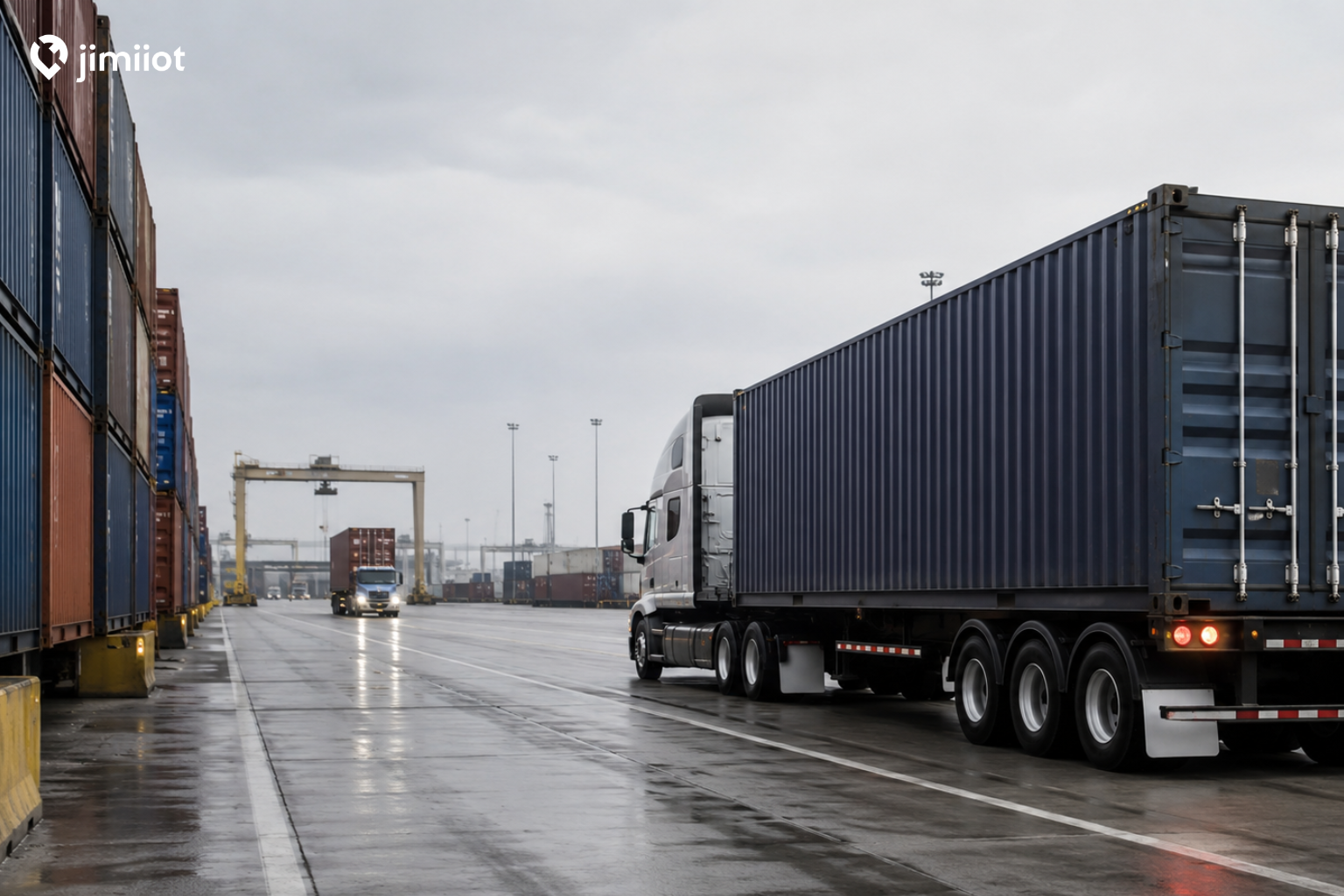
Why trailer tracking matters for cargo security
Many fleets already track trucks. That is useful, but it does not fully solve the trailer problem.
A truck usually has a driver, a route, and power. A trailer may not. It can be dropped, exchanged, parked, reassigned, or left at a customer site. If the trailer does not have its own tracker, the fleet may lose visibility once it is disconnected from the tractor.
This creates blind spots in several common situations:
- A loaded trailer sits overnight in a yard.
- A trailer is dropped at a third-party warehouse.
- A container chassis is moved between terminals.
- A trailer leaves a customer site earlier than expected.
- A driver picks up the wrong unit.
- A trailer is moved after business hours.
In these cases, a GPS asset tracker gives the trailer its own visibility. The fleet does not need to depend only on truck location, phone calls, or manual yard checks.
What a trailer tracking system should do
A trailer tracking system should help the operations team answer basic questions quickly.
- Where is the trailer now?
- When did it last report location?
- Is it inside the assigned yard or geofence?
- Did it move after hours?
- Has the tracker been removed?
- Was there vibration or unusual movement?
- Which route did the trailer follow?
- Where was the trailer last seen before the alert?
These questions are simple, but they matter during a cargo theft event. A delayed answer can cost hours. A clear alert can help the team check the situation earlier.
Trailer tracking works best when the device, platform, and alert process are planned together. A tracker alone is not enough. The team also needs geofences, alert rules, route history, battery monitoring, and someone responsible for checking alerts.
Geofence alerts for yards and customer sites
Geofencing is one of the most useful tools for trailer tracking.
A geofence is a virtual boundary around a location. For logistics fleets, that location may be a yard, terminal, warehouse, customer site, fuel stop, rest area, or approved parking area.
When a trailer enters or exits the geofence, the system can record the event or send an alert.
This is useful for cargo theft prevention because many problems start with unexpected movement.
For example:
- A loaded trailer leaves a yard outside the pickup window.
- A trailer exits a customer site without dispatch approval.
- A container chassis moves out of a terminal after hours.
- A trailer enters an unapproved parking area.
- A rental trailer leaves the assigned service area.
The alert does not automatically prove theft. It tells the team that the movement needs to be checked.
That is the practical value. The team sees the exception sooner.
Movement alerts and tamper alerts
Some trailer movements happen outside normal routes or scheduled pickup times. A tracking system should detect these changes without requiring someone to watch a map all day.
Useful trailer alerts may include:
- Geofence exit
- Unauthorized movement
- Vibration
- Device removal
- Light sensor trigger
- Low battery
- Long stop
- Route deviation
- After-hours movement
- Power disconnection, if the tracker is wired
For standalone trailer tracking, vibration and removal alerts are especially useful. A trailer parked in a yard may not need constant live tracking, but the team should know when it is disturbed or moved.
JM-LL02, for example, includes a light sensor that can trigger a tamper alert when the device is removed. It also supports vibration alerts, geofence entry and exit alerts, and IP67 dust and water resistance, which makes it suitable for outdoor logistics and asset tracking scenarios.
Route history after a theft or dispute
Alerts help during an event. Route history helps after the event.
If a trailer moves unexpectedly, route history can show where it traveled, when it stopped, and where it last reported. This record can support internal investigation, customer communication, insurance review, and law enforcement reporting.
Route history also helps identify weak spots in daily operations.
Maybe one yard has repeated after-hours trailer movement. Maybe trailers often sit too long at a customer location. Maybe a specific lane creates more route deviations. Maybe the team needs better pickup verification before a loaded trailer leaves the site.
Without location history, these patterns are hard to confirm. With route records, managers can adjust procedures based on real movement data.
Battery life is critical for trailer tracking
Battery life is one of the first things to check when choosing a GPS asset tracker for trailers.
Many trailers do not provide stable power. Some are parked for days. Some are moved by different tractors. Some operate across long-distance routes where maintenance access is limited.
A short-battery device can become a problem quickly if the team has hundreds or thousands of trailers.
Before choosing a tracker, fleet operators should ask:
- How long can the trailer sit without charging?
- How often does the trailer move?
- Does the team need live tracking or periodic updates?
- Will the tracker wake up when movement happens?
- Can the device report low battery?
- How easy is it to recharge or redeploy?
- Is the trailer used in rain, dust, heat, or cold?
LL301 is designed for long standby asset tracking and includes a 10,000mAh rechargeable battery, GPS and LBS positioning, LTE and GSM network support, multiple working modes, and instant alerts for events such as device removal, vibration, and low battery. These features make it suitable for logistics transportation, fleet management, and vehicle rental scenarios where battery life and flexible deployment matter.
Installation: fast deployment vs hidden placement
Trailer tracking installation should balance two needs.
The tracker should be easy to install. It should also be hard to remove.
A strong magnetic mount is useful for fast deployment, especially when a fleet wants to track trailers, containers, rental units, or temporary assets without complex wiring. It also helps when devices need to be moved between assets.
For higher-risk cargo, hidden or more secure placement may be better. The device should not be obvious to anyone trying to remove it. Tamper alerts can help, but placement still matters.
JM-LL02 supports a strong magnetic mount for simple installation and is designed for rugged applications. It also supports Bluetooth configuration, which can make field setup easier for operations teams.
Trailer tracking workflow for US logistics fleets
A practical trailer tracking workflow does not need to be complicated.
Start with high-risk trailers first. These may include loaded trailers, trailers carrying high-value cargo, units parked overnight, trailers stored outside controlled yards, or assets used by third-party partners.
A simple workflow can look like this:
- Attach GPS asset trackers to selected trailers.
- Create geofences around yards, warehouses, terminals, customer sites, and approved parking areas.
- Set alerts for geofence exit, vibration, device removal, low battery, and after-hours movement.
- Assign alert responsibility to dispatch, operations, or security teams.
- Review route history after abnormal events.
- Adjust geofences and alert rules based on actual operations.
- Expand the system to more trailers once the workflow is stable.
This keeps the system useful. The team gets fewer random alerts and more events that deserve attention.
How Jimi IoT supports trailer and cargo visibility
Jimi IoT provides GPS asset trackers and platform tools for logistics, fleet management, vehicle rental, and asset tracking use cases.
For long standby trailer tracking, LL301 offers GPS and LBS positioning, LTE and GSM connectivity, a 10,000mAh rechargeable battery, multiple working modes, and instant alerts for abnormal events such as device removal and vibration.
For rugged, easy-to-deploy tracking, JM-LL02 provides GPS and LBS positioning, a 6,000mAh rechargeable battery, strong magnetic mounting, IP67 dust and water resistance, Bluetooth configuration, and a light sensor for tamper alerts. It is positioned for asset tracking, vehicle rental, and logistics applications.
With Tracksolid Pro, logistics teams can monitor assets, review location history, set geofences, manage alerts, and support daily trailer visibility through a cloud platform and mobile app.
This gives fleet operators a more practical way to track trailers and cargo assets that are difficult to manage through truck location alone.
What to check before deploying trailer tracking
Before rolling out trailer tracking across a fleet, review these points:
- Which trailers carry the highest-value cargo?
- Which trailers are often parked overnight?
- Which yards or customer sites have the most visibility gaps?
- Do trailers need real-time tracking or periodic updates?
- How long should the tracker battery last between charges?
- Should the tracker be magnetic, hidden, or fixed more securely?
- Which alerts should dispatch receive immediately?
- Who checks alerts after business hours?
- How will route history be reviewed after an incident?
- How will the team avoid alert fatigue?
Good trailer tracking is not about adding more data for the sake of it. It is about giving the right team the right alert at the right time.
Final thoughts
Trailer tracking gives logistics fleets better visibility over assets that are often outside direct control.
For cargo theft prevention, this visibility can make a real difference. A trailer that moves after hours, leaves a geofence, triggers a tamper alert, or stops in an unexpected location should not go unnoticed.
GPS asset trackers, geofence alerts, route history, and battery-aware working modes help teams detect issues earlier and review events with more confidence.
For US logistics fleets, a practical first step is simple: start with high-risk trailers, set clear geofences, configure useful alerts, and build a response process that the operations team can follow every day.


