
 EN
EN ES
ES PT
PT TH
TH VN
VN JP
JPTrailers are easy to overlook.
For many fleet operators, the truck gets most of the attention. It has the driver, the engine, the fuel cost, the maintenance schedule, and the telematics device. The trailer, on the other hand, is often treated as a passive asset.
But in daily operations, trailers carry the cargo, store the equipment, sit at yards, wait at jobsites, move between terminals, and often stay disconnected from the truck for long periods of time. When a trailer is lost, stolen, misplaced, underused, or sitting idle in the wrong place, the cost can quickly become much bigger than expected.
That is why trailer tracking has become an important part of fleet management for both logistics and construction businesses. It gives operators visibility into assets that are mobile, valuable, and often difficult to monitor manually.
For companies that want stronger security, better dispatching, and more control over field operations, GPS trailer tracking is no longer just a nice extra. It is becoming a practical tool for protecting assets and improving daily efficiency.
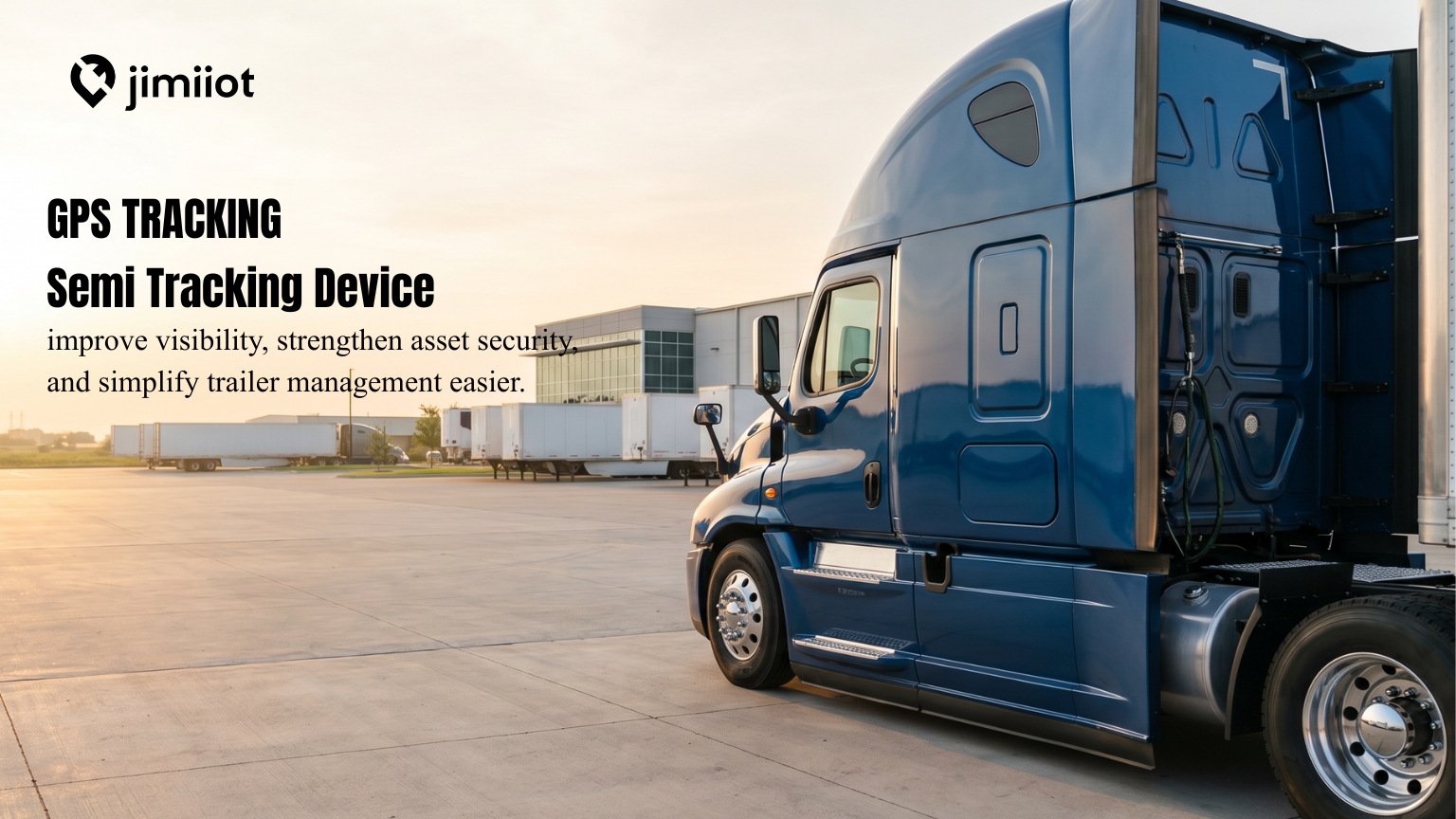
The Visibility Gap in Trailer Operations
Many fleets already track their powered vehicles. They know where trucks are, how fast they are moving, and when drivers arrive at a destination.
The problem is that trailers do not always stay connected to the same vehicle.
A trailer may be dropped at a customer site. It may be parked in a yard. It may be waiting at a warehouse. It may be moved by another vehicle. In construction, it may sit near a jobsite with tools, materials, or equipment inside.
Without a dedicated trailer tracking device, managers may only know where the truck is, not where the trailer actually is.
This creates several common problems:
- Teams spend time calling drivers or yard staff to confirm trailer location.
- Dispatchers may assign a trailer that is not actually available.
- Idle trailers are forgotten or underused.
- Unauthorized movement may not be noticed quickly.
- Theft or loss may only be discovered hours later.
- Construction crews may arrive at a jobsite without the tools or materials they need.
Trailer tracking helps close this visibility gap by giving each trailer its own identity, location, and movement history.
Why Trailer Tracking Matters for Logistics Fleets
For logistics businesses, trailers are directly tied to delivery capacity. A fleet may have enough trucks and drivers, but if trailers are not available in the right place at the right time, operations can slow down quickly.
- Better Trailer Utilization
One of the biggest advantages of trailer tracking is improved utilization.
Many fleets own more trailers than they think they need, simply because they do not have clear visibility into where each one is or how often it is used. Some trailers may sit idle for days or weeks, while others are constantly in demand.
With GPS trailer tracking, fleet managers can see:
- Which trailers are active
- Which trailers are parked
- How long trailers stay at a location
- Which yards or customer sites have unused trailers
- Whether a trailer is being used efficiently
This data helps businesses reduce unnecessary purchases, avoid rental costs, and make better use of the assets they already own.
- Faster Dispatching and Yard Management
In logistics, small delays can create bigger problems across the delivery chain.
If a dispatcher cannot quickly confirm which trailer is available, where it is parked, or whether it has already been moved, the team may waste time searching manually. This is especially common in large yards, warehouses, distribution centers, and multi-site operations.
Trailer tracking helps dispatchers make faster decisions. Instead of relying on phone calls or manual checks, they can use location data to identify the nearest available trailer and assign it more confidently.
For fleets with high trailer turnover, this can reduce confusion and improve daily workflow.
- Stronger Cargo Security
Cargo theft remains a major concern for logistics businesses across North America. Trailers are often targeted because they can contain high-value goods and may be parked for long periods during transit, at yards, or near warehouses.
A trailer tracking solution can help improve security with features such as:
- Real-time location tracking
- Geofence alerts
- Unauthorized movement alerts
- Route history
- Tamper alerts
- Long battery life for disconnected assets
If a trailer moves outside an approved area or starts moving at an unexpected time, the system can send an alert so the team can respond faster.
GPS tracking does not replace physical locks, driver training, or security procedures, but it adds a crucial layer of visibility. For high-value cargo, that visibility can make a major difference.
- Clearer Proof of Location and Movement
Trailer tracking also helps when there are disputes or questions about where an asset was and when it moved.
For example, a logistics company may need to confirm:
- When a trailer arrived at a customer site
- How long it remained there
- Whether it left the approved route
- Whether it was moved without authorization
- Which locations it visited during a certain period
Location history provides a clearer record for internal review, customer communication, and incident investigation.
Why Trailer Tracking Matters for Construction Fleets
Construction fleets face a different set of challenges. Trailers are often used to move equipment, tools, generators, small machines, materials, and temporary storage between jobsites.
Unlike logistics trailers, construction trailers may spend more time parked in open lots, temporary sites, roadside areas, or remote locations. This makes visibility and security even more important.
- Protecting Tools, Materials, and Equipment
Construction trailers often carry valuable equipment. Even when the trailer itself is not the most expensive asset, the items inside may represent a major investment.
If a trailer is stolen or moved without notice, the loss can affect more than the asset value. It can delay a project, leave workers without necessary tools, and create additional rental or replacement costs.
Trailer tracking gives construction companies a way to monitor mobile storage and equipment transport more effectively.
With real-time location and movement alerts, managers can react faster when a trailer leaves a jobsite unexpectedly.
- Reducing Jobsite Delays
In construction, timing matters.
A crew may be ready to start work, but if the trailer with tools, machines, or materials is at the wrong jobsite, the entire schedule can be disrupted. Workers may wait, equipment may sit unused, and project timelines may slip.
Trailer tracking helps teams confirm that the right trailer is at the right location before work begins.
This is especially useful for companies managing multiple jobsites, subcontractors, or shared equipment pools.
- Monitoring Non-Powered Assets
Many construction assets do not have their own power source. Trailers, containers, portable storage units, and certain equipment may sit disconnected from vehicles for long periods.
This makes battery life and rugged hardware especially important.
A good trailer tracker should be designed for non-powered asset monitoring. It should be able to operate for long periods, withstand harsh outdoor environments, and continue reporting location data even when the trailer is not connected to a vehicle.
For construction fleets, this is often the difference between theoretical tracking and practical field use.
- Improving Accountability Across Teams
Construction operations often involve multiple teams, drivers, contractors, and project managers. When assets move between jobsites, it can be difficult to know who moved what, when, and why.
Trailer tracking creates a clearer asset record.
Managers can see when a trailer left one location, when it arrived at another, and how long it stayed there. This helps reduce confusion, improve accountability, and support better planning across projects.
Key Features to Look for in a Trailer Tracking Solution
Not all trailer tracking devices are the same. For logistics and construction fleets, the best solution depends on how the trailers are used, where they operate, and how often they are connected to power.
Here are the most important features to consider.
- Real-Time Location Tracking
Real-time location tracking helps teams know where trailers are now, not just where they were last seen. This is useful for dispatching, theft response, yard management, and jobsite coordination.
- Geofence Alerts
Geofences allow businesses to create virtual boundaries around yards, warehouses, customer sites, or jobsites. If a trailer enters or leaves a defined area, the system can send an alert.
This is especially useful for detecting unauthorized movement or confirming arrivals and departures.
- Unauthorized Movement Alerts
A trailer may be parked for hours or days before it moves. If movement happens outside normal operating hours or without a scheduled dispatch, managers need to know quickly.
Movement alerts help teams respond before a loss becomes harder to recover.
- Long Battery Life
Since trailers are often disconnected from powered vehicles, long battery life is essential. A trailer tracking device should support extended operation and be suitable for assets that may remain parked for long periods.
- Rugged Design
Trailers are exposed to vibration, weather, dust, heat, cold, and rough handling. A tracker used in logistics or construction should be built for real field conditions, not just controlled environments.
- Platform Visibility
Hardware is only part of the solution. Fleet managers also need a platform where they can view locations, receive alerts, review route history, and manage multiple assets in one place.
A centralized platform makes trailer tracking easier to use across teams and locations.
Trailer Tracking Is Not Just About Theft Prevention
Security is one of the strongest reasons to track trailers, but it is not the only benefit.
A good trailer tracking system can also help businesses:
- Improve asset utilization
- Reduce manual check-ins
- Make dispatching faster
- Lower unnecessary rental or replacement costs
- Reduce jobsite delays
- Strengthen customer communication
- Support incident investigation
- Improve operational transparency
For logistics fleets, this means better control over trailer capacity and movement.
For construction fleets, it means stronger visibility over tools, equipment, and mobile storage.
In both cases, trailer tracking turns a passive asset into a connected part of the operation.
How Jimi IoT Supports Trailer and Asset Tracking
Jimi IoT provides reliable IoT devices and fleet management solutions designed for real-world asset tracking scenarios.
For trailer tracking, our solutions help businesses monitor location, movement status, alerts, and historical routes through connected hardware and cloud-based platforms. Whether trailers are moving between logistics hubs or parked at construction jobsites, Jimi IoT helps teams maintain better visibility and respond more quickly when something changes.
Our asset tracking solutions are built to support practical business needs, including:
- Trailer and container tracking
- Construction equipment monitoring
- Cargo and asset protection
- Fleet visibility
- Geofence-based alerts
- Long-term asset monitoring
- Centralized platform management
By combining durable tracking hardware with intelligent software, Jimi IoT helps logistics and construction businesses protect mobile assets and manage operations with greater confidence.
Final Thoughts
Trailers may not always be the most visible part of a fleet, but they are often among the most important assets to track.
For logistics companies, trailers affect capacity, delivery performance, cargo security, and yard efficiency. For construction companies, trailers help move tools, equipment, and materials that keep projects running.
Without trailer tracking, businesses may depend on manual updates, driver calls, and delayed reports. With GPS trailer tracking, they gain real-time visibility, stronger security, and better control over daily operations.
As fleet operations become more connected, trailer tracking is no longer just about knowing where a trailer is. It is about making sure the right asset is available, protected, and ready when the business needs it.
Looking for a Smarter Way to Track Trailers and Mobile Assets?
Jimi IoT helps logistics and construction fleets improve visibility, strengthen asset security, and simplify trailer management with reliable GPS tracking solutions.
Contact our team to learn how our trailer and asset tracking solutions can support your fleet.


